For years, Employee Experience (EX) followed a familiar pattern. Organizations collected feedback through surveys, analyzed engagement scores, and reviewed sentiment trends to understand how employees felt. These systems created visibility, and for a long time, that was enough. But visibility is no longer the goal.
Today, EX leaders are being asked to do something far more difficult: connect employee feedback directly to business outcomes. Leadership is no longer satisfied with knowing whether employees are engaged or disengaged. They want to understand what is driving those outcomes—and what actions will change them. This marks a fundamental shift in how Employee Experience is defined. Insight, on its own, is no longer valuable unless it leads to clear, measurable action.
The Hidden Problem: Feedback Without Direction
Most organizations are not struggling to collect employee feedback. They are struggling to use it. Across engagement surveys, internal tools, open-text responses, and HR platforms, companies are gathering an overwhelming volume of qualitative data. In theory, this should make decision-making easier. In practice, it often has the opposite effect. The more feedback teams collect, the harder it becomes to extract what truly matters. HR leaders are left navigating large volumes of comments without a clear sense of priority. In practice, this means quickly surfacing the most common employee questions and concerns without manually reviewing thousands of comments.
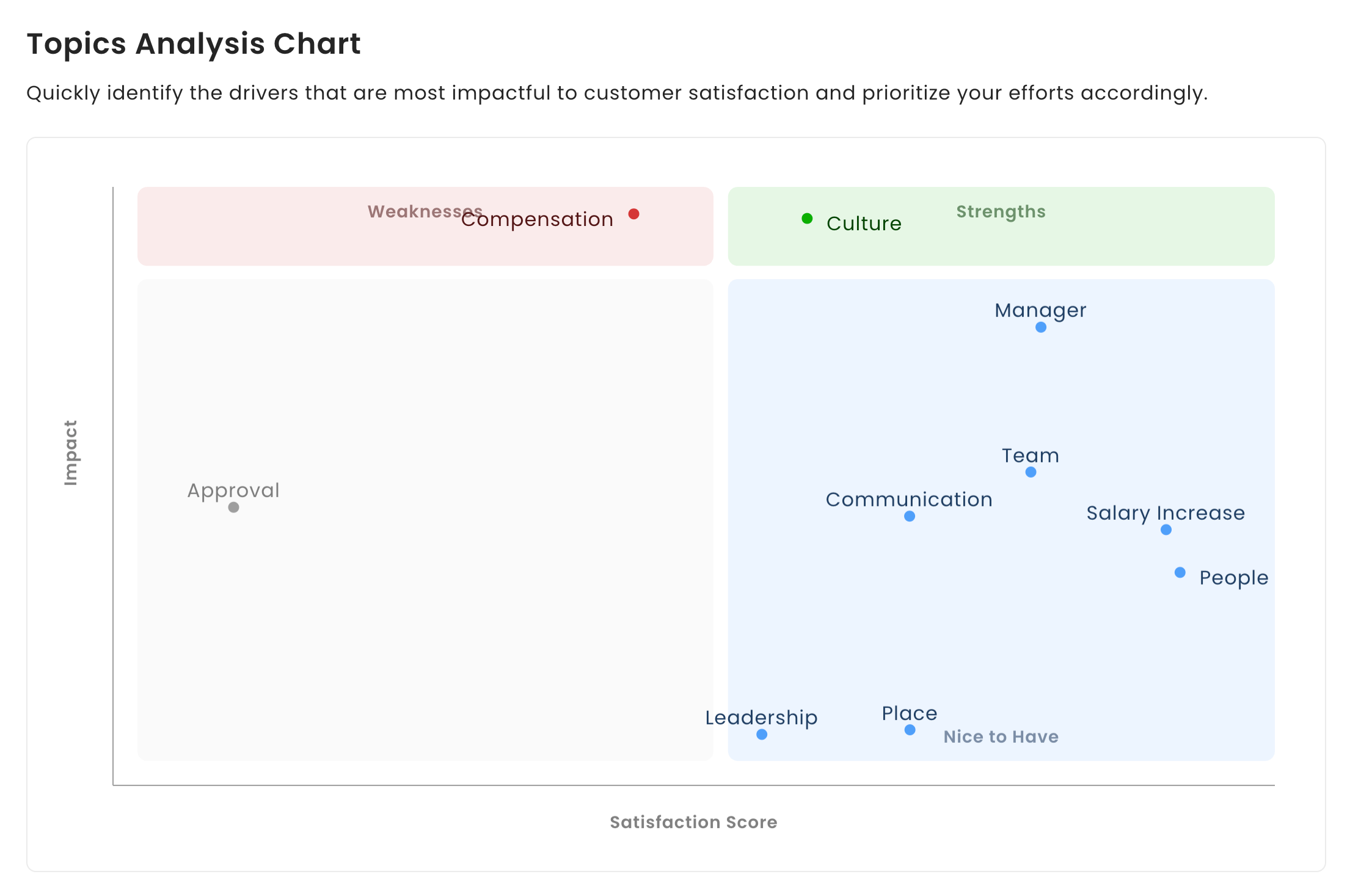
Identify recurring employee questions and concerns instantly to uncover workforce priorities without manual analysis.
Patterns emerge slowly. Insights require manual interpretation. And even when issues are identified, translating them into action is rarely straightforward. What emerges is a gap—not in data, but in direction.
Why Traditional EX Approaches Break Down
The tools that shaped Employee Experience were designed to measure sentiment, not to drive decisions. They are effective at organizing feedback into categories and surfacing trends. But they still depend heavily on human interpretation. Someone has to read through responses, identify patterns, and determine what actions should follow. This introduces friction into the process. By the time insights are fully understood, the opportunity to act early has often passed. What should have been a proactive adjustment becomes a reactive response. That delay is costly—not just in time, but in employee trust, engagement, and retention.
The Shift: From Measuring Experience to Driving Outcomes
The expectations placed on EX teams have evolved. It is no longer enough to report on engagement levels or sentiment trends. Organizations now expect Employee Experience to contribute directly to business performance. That includes areas such as retention, productivity, and organizational alignment—outcomes that require more than observation. They require decisive action. This shift demands a new kind of capability: the ability to move from feedback to decisions quickly, consistently, and at scale.
Introducing Agentic EX Analytics
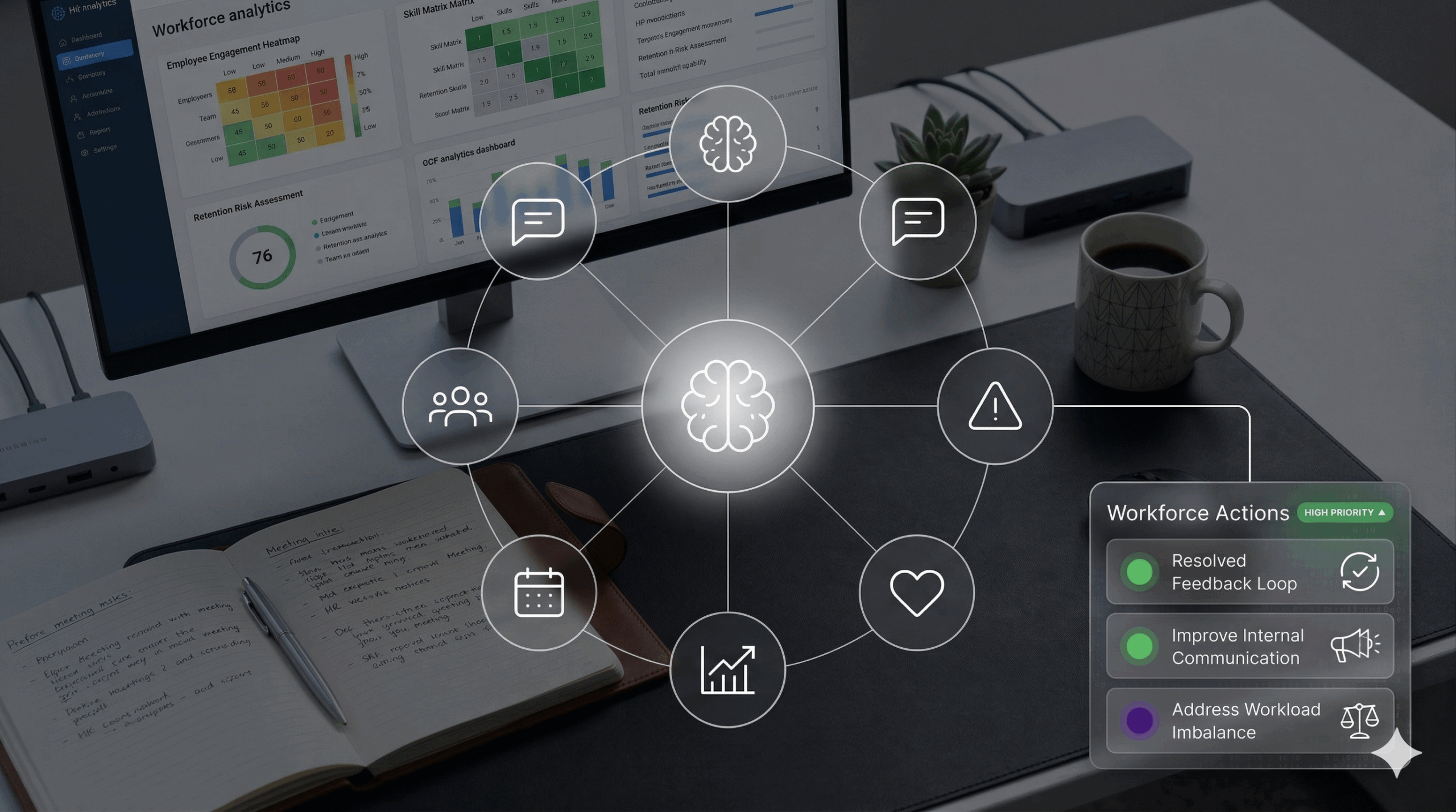
Agentic EX Analytics represents that shift. Rather than functioning as a passive system that summarizes feedback, it acts as a decision-support layer for workforce strategy. It processes large volumes of employee feedback automatically, identifies recurring issues, and surfaces the underlying drivers behind them. Teams can instantly visualize the most critical workforce issues, understand how they impact employee sentiment, and track how those issues evolve over time.
Automatically detect and prioritize workforce issues based on employee feedback—no manual tagging required.
What makes this different is not just automation—it is prioritization. Instead of presenting data that needs interpretation, the system highlights what matters most and connects it directly to recommended actions. It removes the need for manual tagging, reduces analysis time, and replaces ambiguity with clarity. What once required hours of review can now be understood in moments.
From Patterns to Action
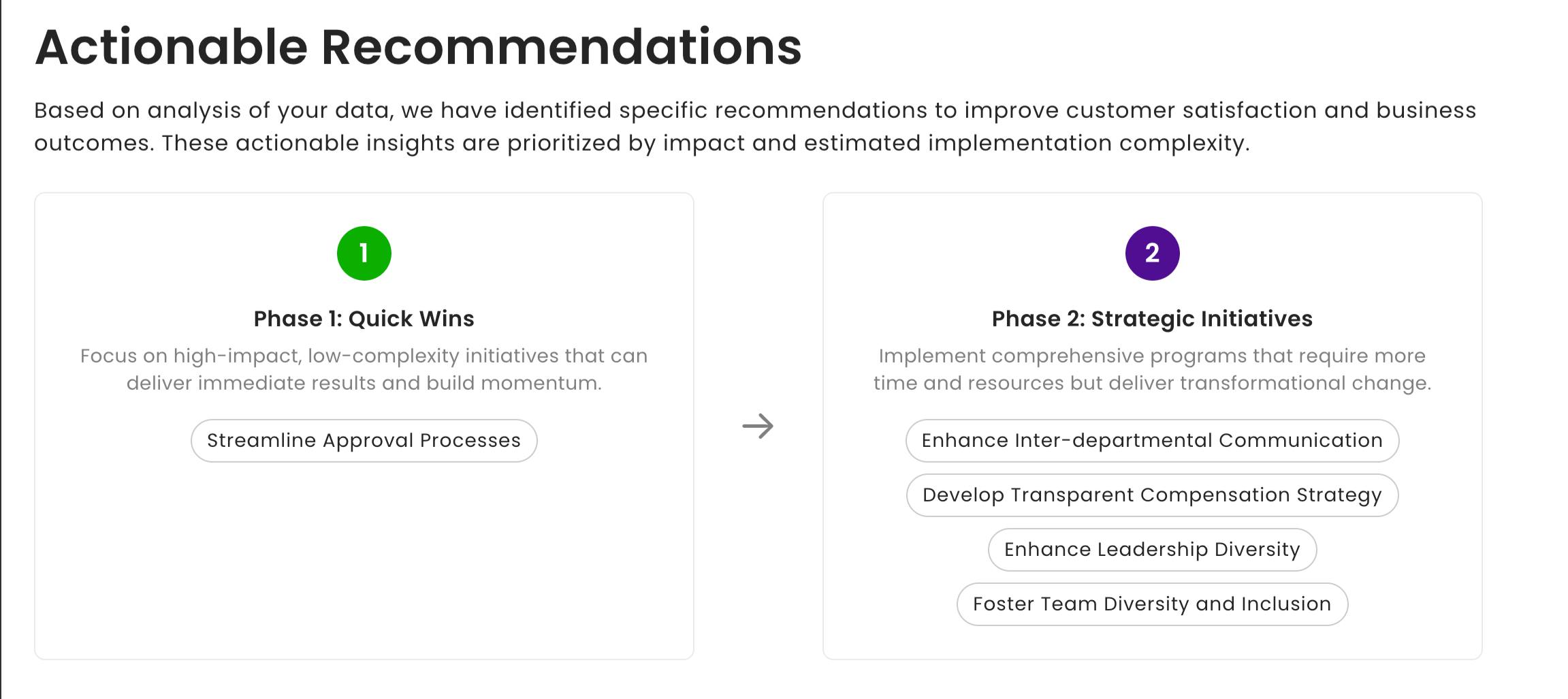
Consider a common situation. Employee feedback begins to reflect concerns around communication—unclear expectations, inconsistent updates, or a lack of alignment between teams. In a traditional workflow, identifying and validating this issue can take significant time. Even once identified, the response is often broad and difficult to operationalize. With an agentic approach, the same pattern is identified immediately and translated into clear next steps. For example, organizations may recognize the need to standardize leadership communication, introduce structured updates, or clarify internal processes.
These are not abstract insights—they are actionable decisions that can be implemented quickly. The difference is not just speed. It is the ability to move from observation to execution without losing momentum.
The New Standard: Clarity at Scale
As organizations grow, the complexity of managing employee experience increases. More feedback does not automatically lead to better decisions. In fact, without the right tools, it often leads to slower ones. What EX leaders need is not more information, but a way to focus on what matters most. This is where automated executive reporting changes the equation. Instead of presenting dashboards filled with data, modern systems deliver a clear view of the workforce landscape—highlighting key issues, their impact, and the actions required to address them. The goal is not to inform, but to enable decisions.
EX Is Now a Driver of Business Performance
Employee Experience is no longer a supporting function. It is a strategic lever. The quality of employee experience now directly influences retention, productivity, and the ability of teams to execute effectively. As a result, expectations have shifted. Leaders are no longer asking for insights alone—they are asking for outcomes. And outcomes require precision, speed, and clarity.
The Question That Matters Now
As we move into 2026, one thing is becoming clear. The organizations that succeed will not be the ones collecting the most feedback. They will be the ones that can act on it the fastest. Because at scale, the challenge is not understanding what employees are saying. It is deciding what to do—and doing it with confidence. So the question for EX leaders is no longer: “What do our employees feel?” It is this: What actions will improve retention, alignment, and performance this quarter?
Turn Employee Feedback Into Workforce Decisions
If your organization is collecting large volumes of employee feedback but struggling to translate it into meaningful action, the approach needs to evolve. The next generation of Employee Experience is not about better measurement. It is about better decisions. Book a demo to see how you can turn employee feedback into a clear, prioritized workforce strategy—in minutes, not months.